
Choosing a car used to come down to a simple question: gas or diesel, sedan or SUV, new or used. That world is gone. Walk into any showroom in 2026 and you’re greeted by hybrids, plug-in hybrids, full electrics, and the last few holdouts of pure internal combustion, all competing for the same buyer. It’s more choice than any car shopper has ever had, and that’s exactly why it’s harder than ever to know what actually deserves your money.
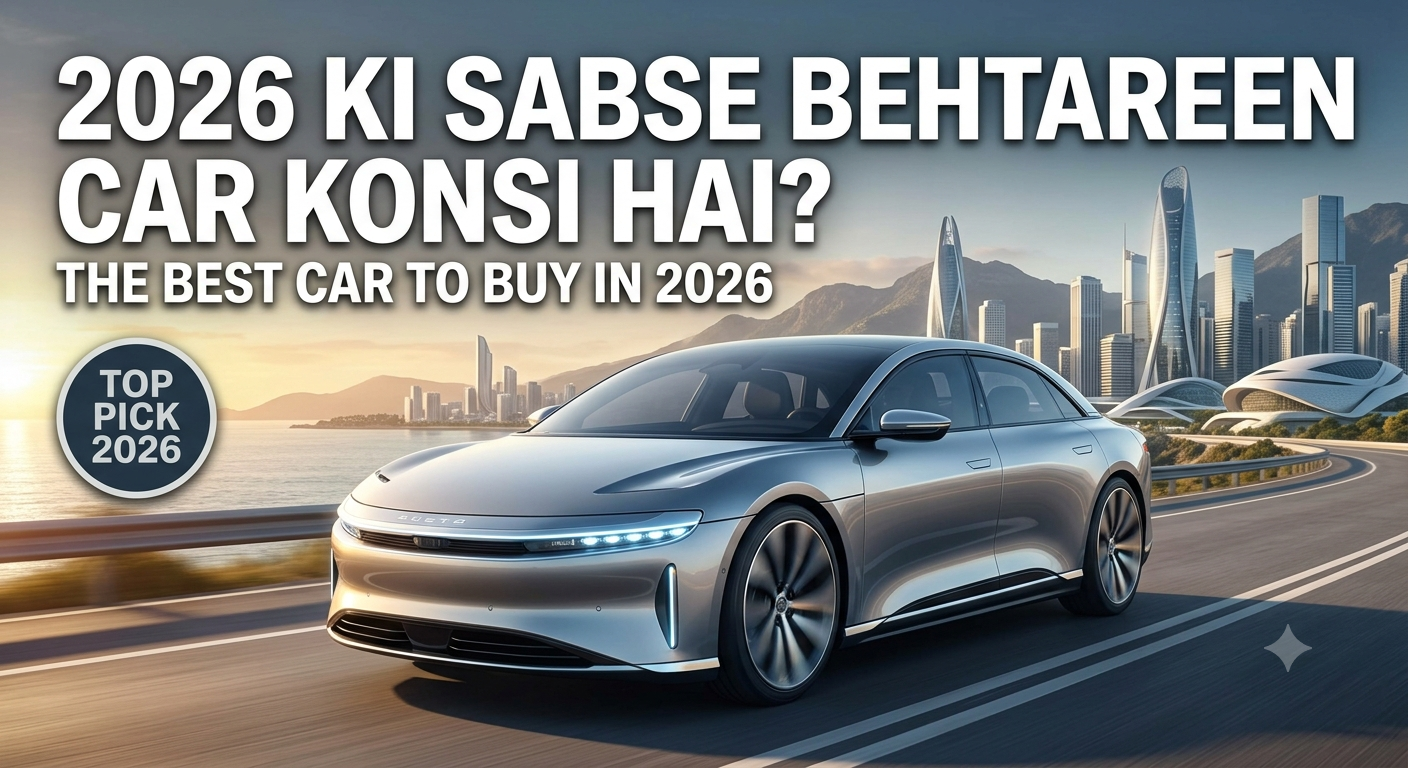
After weighing reliability data, real-world fuel costs, safety ratings, and what owners actually say once the new-car smell fades, one vehicle keeps rising to the top for the widest range of buyers: the Toyota Camry Hybrid. It isn’t the flashiest car on the road, and it won’t win a stoplight drag race against a performance EV. But if the question is “what’s the best car for most people right now,” the Camry Hybrid answers it better than anything else on the market.
Table of Contents
Why the Camry Hybrid Wins
Toyota made a bold move for this generation of Camry: every single trim level is now a hybrid. There’s no gas-only base model to fall back on, which tells you how confident Toyota is in the powertrain. That confidence is earned. The hybrid system pairs a four-cylinder engine with an electric motor to deliver fuel economy in the high 40s to low 50s per gallon, a number that used to be reserved for tiny economy cars, not a roomy midsize sedan with real trunk space and comfortable seating for five.
The math is what makes this car genuinely compelling rather than just efficient on paper. At current gas prices and average annual mileage, a Camry Hybrid owner spends roughly a third of what they’d spend fueling an older V6 sedan. Over the life of a car that’s driven for a decade or more, that difference isn’t pocket change — it’s thousands of dollars that stay in your bank account instead of disappearing at the pump.
Then there’s reliability, which is where hybrids from Toyota tend to separate themselves from the pack. The Camry’s hybrid system is now in its fifth generation, meaning Toyota has had years to refine it, iron out weaknesses, and let real-world ownership data prove it out. That maturity shows up in dependability studies and in the simple fact that Camry hybrids routinely rack up well over 200,000 miles without major powertrain issues. For a car you’re going to lean on every single day, that kind of track record matters more than a flashy spec sheet.
Safety hasn’t been left behind either. The Camry earns top-tier crash ratings and comes with a full suite of driver-assist features as standard equipment, not a pricey add-on package. Adaptive cruise control, lane-keeping assistance, and automatic emergency braking are simply part of the car, which is exactly where this kind of technology should live in 2026 — standard, not optional.
What About the Competition?
No single car is right for everyone, and the Camry Hybrid has good company at the top of the class.
If you want something smaller and sportier, the Honda Civic Hybrid is genuinely excellent. It has the kind of tactile, well-engineered feel that makes an inexpensive car seem far pricier than its sticker suggests — a solid shifter feel, a steering wheel that builds weight naturally through corners, and an interior that doesn’t feel like it was built down to a price. If your budget tops out around $25,000 and you don’t need a full-size sedan, the Civic Hybrid is the smart-money pick.
For buyers who’ve decided they’re ready to go fully electric, the Tesla Model Y remains the benchmark. It combines genuinely quick acceleration, a usable hatchback shape, and access to the most reliable fast-charging network in the country. Reliability, historically Tesla’s weak spot, has been improving steadily, and recent refreshes have added a smoother ride and a quieter cabin — two things that used to be legitimate criticisms of the car.
If your household needs three rows and real cargo room, look at the hybrid versions of today’s midsize SUVs. Several now deliver fuel economy that rivals compact hybrid sedans while still comfortably seating seven, a combination that simply didn’t exist a few years ago. All-wheel drive, once a pricey option reserved for luxury trims, is now standard on many hybrid SUVs, which matters a lot if you deal with snow, rain, or rough roads for part of the year.
How to Actually Decide
The honest, unglamorous truth is that the “best car” depends on how you actually live, not on which model wins the most awards. A few grounded questions can cut through the noise:
Do you have reliable access to home charging? If yes, and your daily driving is predictable, a full EV like the Model Y can genuinely save you money and hassle. If you live in an apartment or take frequent long road trips without a clear charging plan, a hybrid gives you the efficiency gains without the range anxiety.
How many people and how much stuff do you need to move regularly? A sedan like the Camry or Civic is plenty for most individuals, couples, and small families. Once you’re routinely hauling more than five people or serious cargo, it’s worth stepping up to a hybrid SUV even though it costs more upfront.
What’s your realistic budget, all-in? Don’t just look at the sticker price. Factor in insurance, expected maintenance, and how well the car holds its value. This is precisely where Toyota and Honda hybrids tend to pull ahead of flashier competitors — they cost less to insure, need less unscheduled repair work, and depreciate more slowly.
The Bottom Line
There’s no universal “best car” that fits every driveway, but for 2026, the Toyota Camry Hybrid comes closest. It combines genuine fuel savings, class-leading reliability, strong safety scores, and a comfortable, spacious cabin — all without asking you to compromise on anything essential. It won’t turn heads in a parking lot, and it doesn’t need to. It just quietly does everything a car is supposed to do, better and more consistently than almost anything else you can buy right now.
If you’re shopping this year, start your test drives there. Then, if you have specific needs — a smaller footprint, full electric power, or three rows of seating — branch out to the Civic Hybrid, Model Y, or a hybrid SUV accordingly. The right car has always been the one that fits your actual life, not the one with the best headline. In 2026, more than ever, you finally have real options in every direction.